

A foundation contractor may spend less time installing screw piles than moving the equipment required to drive them. On a site with fifty or sixty installation points, every change of position involves a sequence of operations. The drive must be aligned, the next pile prepared and the machinery positioned where it can work safely. Even a few unnecessary minutes between installations can increase the duration and cost of a project.
Tracked screw pile machines are designed to address some of these practical difficulties. Unlike installation systems that depend entirely on separate carrier equipment or manual repositioning, self-propelled machines combine mobility with the hydraulic components required for foundation work. Their usefulness is particularly apparent on sites where piles are distributed across a substantial working area or where repeated machine movements are unavoidable.
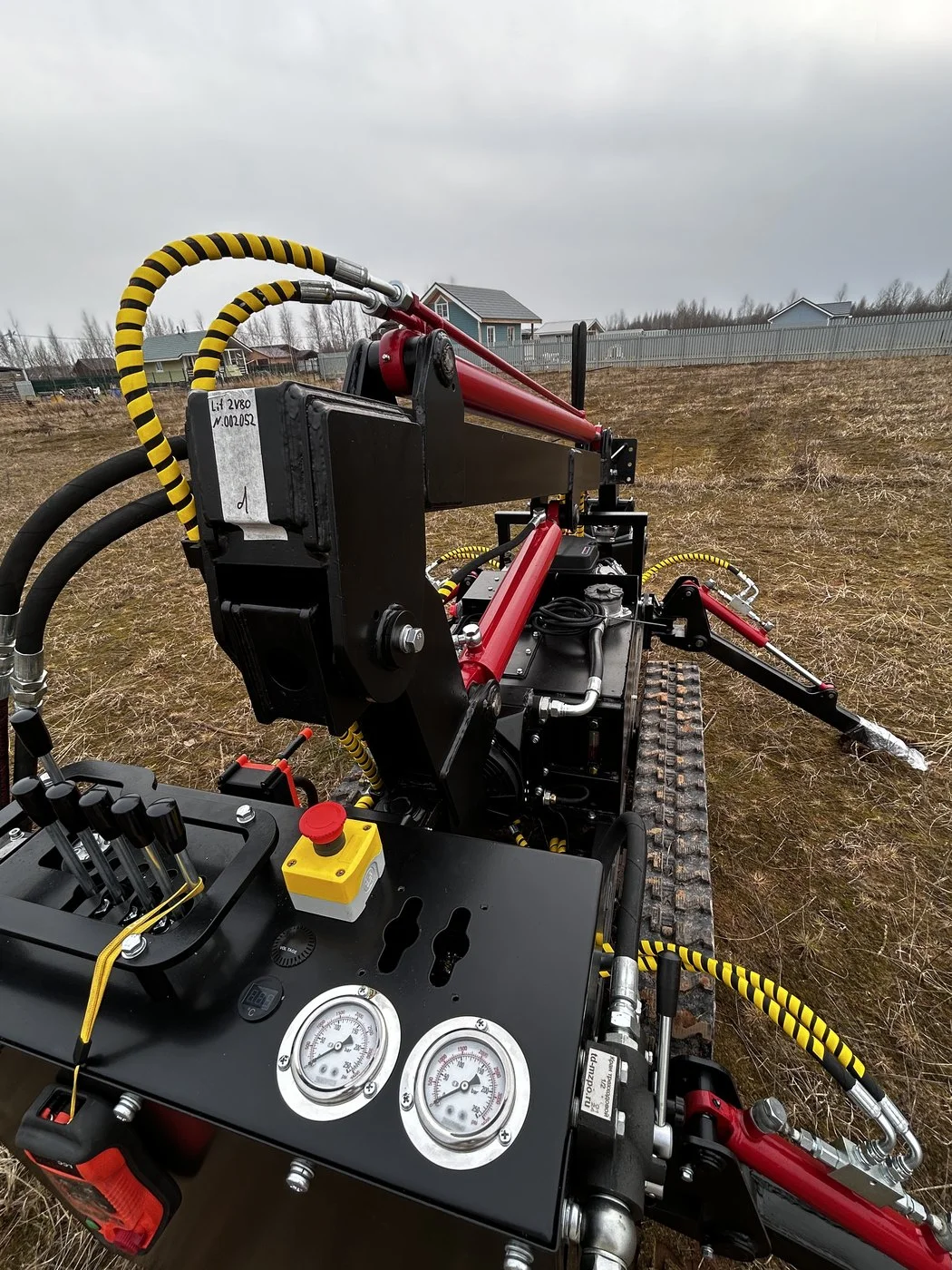
The Cougar machine, described at https://iron-mechanics.com/product/helical-pile-machine/, illustrates this equipment category. It combines a rubber-tracked undercarriage, telescopic hydraulic boom and swivel drive head, with wireless remote control for travelling. These features allow the operator to position the installation equipment at successive foundation points without relying on a separate excavator to transport the drive unit. However, their practical value depends on site conditions, foundation specifications and the way the installation work is organised.
Why Equipment Movement Matters on Foundation Sites
The performance of a screw pile installation machine is often judged by its maximum torque or the time required to drive an individual pile. Both figures are relevant, but neither fully describes productivity across a construction project. The complete installation cycle includes approaching the working position, preparing the pile, establishing alignment, driving it to the specified requirements and completing the necessary checks.
Movement between positions can account for a substantial proportion of that cycle. Where equipment must be dismantled, carried or repositioned with another machine, installation crews may spend considerable time preparing for each operation. The effect becomes more pronounced as the number of foundation points increases.
Site layout influences these delays. A foundation supporting a compact building may contain closely spaced piles that can be reached from a limited number of machine positions. A larger commercial project may require installations across separate working areas, with varying access conditions and distances between foundation points.
Traditional excavator-mounted equipment can be effective where a suitable carrier is already available. The excavator provides hydraulic power and positions the drive head using its boom. However, contractors must account for the availability of the carrier, its working radius and the practicalities of moving it between installation locations.
Handheld hydraulic drivers offer a different solution. Their portability can make them useful on smaller projects or sites with limited access. Yet moving the driver, hydraulic hoses, power equipment and supporting components repeatedly may become labour-intensive over a larger installation programme.
Self-propelled tracked machinery offers an alternative by bringing several functions together. A dedicated travelling chassis allows the installation equipment to move as one unit, potentially reducing handling requirements and simplifying the sequence of work.
How Tracked Undercarriages Affect Site Mobility
Tracked undercarriages distribute machine weight over a relatively large contact area compared with some wheeled arrangements. This can provide useful traction on certain uneven or loose surfaces, although performance depends on the machine’s weight, track design and ground conditions. Tracks should not be regarded as a guarantee of safe operation on soft, unstable or steep terrain.
Construction sites often contain temporary access routes, compacted soil, gravel and surfaces disturbed by earlier operations. A machine capable of travelling between foundation positions without requiring extensive preparation at every location may help maintain a more consistent workflow. The advantage is particularly relevant where repeated movements form a significant part of the working day.
Rubber tracks can offer practical benefits on appropriate surfaces, including certain prepared access routes and paved areas. Nevertheless, ground disturbance remains possible, especially during turning or operation on unsuitable material. Contractors must assess the surface and provide protection where necessary.
Machine dimensions are as important as traction. A tracked unit must pass through available entrances, negotiate obstacles and have sufficient space to turn or reposition. Its boom and installation components may require additional clearance beyond the dimensions of the chassis itself.
The Cougar machine has published transport dimensions of 2,400 × 1,200 × 1,758 mm and an operating weight of approximately 1,250 to 1,270 kg, depending on configuration. These figures provide a useful starting point when assessing access and transport requirements. They do not, however, establish the minimum working space required for every installation arrangement.
The manufacturer’s specified travelling speed is 2.5 to 5 km/h. For foundation installation, this characteristic is less important than the ability to move safely and position the machine accurately. A short travelling distance completed without additional handling may be more valuable than a higher maximum speed.
Contractors should therefore assess tracked mobility in the context of the complete site. The most suitable machine is one that can reach the planned positions, operate on the available ground and move between installations without introducing unnecessary risks.
Positioning the Drive Head With Greater Flexibility
Mobility solves only part of the installation problem. Once a machine reaches a foundation position, the operator must align the drive head with the specified pile location and installation angle. Equipment geometry influences how efficiently this can be achieved.
A telescopic boom allows the working assembly to be positioned at different distances within its operating range. When combined with a swivel drive head, it can provide greater flexibility in approaching individual installation points. This may reduce the need to reposition the entire chassis for every adjustment.
The Cougar uses a telescopic hydraulic boom and swivel installation head. Its hydraulic controls operate the relevant working assemblies, while remote control is provided for machine travel. This arrangement separates travelling operations from the positioning and installation functions that require close attention to the foundation geometry.
Such flexibility can be valuable when piles are located near obstacles or when the machine cannot stand directly beside each installation point. However, the available boom reach and movement range must be considered alongside the operating limitations of the equipment. The presence of a telescopic boom does not mean that every position within its theoretical reach is suitable for installation.
The reaction forces generated during pile rotation also affect machine stability. As resistance increases, the drive system must transmit torque while the equipment maintains its intended operating position. Appropriate support, ground conditions and compliance with the manufacturer’s instructions remain essential.
Accurate pile alignment cannot be achieved through hydraulic controls alone. The installation crew must establish the correct foundation position and monitor the pile as it advances. If unexpected resistance causes deviation, further action should follow the specified engineering and installation procedures.
Flexible positioning equipment can help reduce unnecessary machine movements, but its primary value is supporting a controlled installation process. Productivity improvements are useful only when they remain compatible with the foundation’s accuracy and safety requirements.
Choosing the Right Torque Configuration
A tracked chassis provides mobility, but the hydraulic drive determines whether the machine has sufficient rotational capacity for the planned foundations. Screw pile installation resistance varies according to shaft dimensions, helix geometry, depth and ground conditions. A machine selected primarily for its compact dimensions may be unsuitable if its drive system cannot meet the technical requirements.
The Cougar is offered with four published torque configurations of 5,600, 7,000, 8,700 and 11,000 Nm. The manufacturer specifies compatibility with screw pile diameters from 56 to 219 mm, although the appropriate configuration must be selected for the particular pile system and installation conditions.
Torque should not be treated as the only performance criterion. Hydraulic pressure, flow, rotational speed and the operating characteristics of the drive motor also influence installation behaviour. The machine must provide suitable power throughout the expected working range without exceeding its rated limits.
When comparing tracked installation machines, contractors should examine several connected requirements.
- Torque capacity. Confirm that the selected configuration is appropriate for the expected installation resistance and pile specifications.
- Hydraulic performance. Review the required operating pressure, fluid flow and any limitations affecting sustained operation.
- Positioning capability. Assess boom reach, drive-head movement and the working clearances needed for accurate installation.
- Site mobility. Consider track dimensions, machine weight, ground pressure, terrain and available access routes.
- Transport requirements. Establish how the equipment will be moved between projects and unloaded safely.
- Maintenance support. Examine service procedures, hydraulic components, replacement parts and operator documentation.
The choice should also reflect the contractor’s typical workload. A company installing relatively small ground screws on residential properties may have different requirements from a specialist contractor handling larger engineered foundations.
Ground investigation remains important regardless of machine capacity. Dense layers and buried obstructions can increase installation resistance or prevent the pile from advancing as intended. A high-torque machine cannot eliminate the need to investigate unexpected conditions or verify that installation meets the foundation design.
The most effective equipment configuration balances sufficient mechanical capability with practical mobility. Purchasing additional torque capacity may offer limited benefit if access restrictions, transport expenses or positioning difficulties determine the project’s productivity.
Where Self-Propelled Installation Machines Are Most Useful
Tracked screw pile machines can be considered for several construction applications, but their suitability depends on the foundation system and site requirements. Repetitive installations offer an obvious opportunity to benefit from integrated mobility, particularly where moving separate equipment between positions would otherwise consume considerable time.
Residential foundation contractors may use tracked machinery on sites with sufficient access for a dedicated machine. Garden buildings, extensions and lightweight structures can involve multiple foundation points, although the scale of the project must justify the equipment’s mobilisation and operating costs.
Commercial projects may present a stronger case where numerous piles are distributed across a larger area. Consistent positioning procedures and the ability to move between locations can support a more organised workflow. Nevertheless, contractors must assess whether the machine’s torque, reach and pile-handling capabilities meet the specified requirements.
Ground-mounted solar installations represent another potential application. Such projects may require repeated foundation operations across an extensive site. The practical suitability of a tracked helical pile machine depends on the mounting system, foundation design, installation tolerances and terrain.
A further consideration is the working environment. Seasonal conditions can affect hydraulic fluid selection, engine operation, ground stability and access routes. The Cougar manufacturer specifies an ambient operating temperature range from −40°C to +40°C, but operating at temperature extremes still requires adherence to the applicable maintenance and fluid recommendations.
Dedicated equipment may be less attractive where installation work is infrequent. A contractor that already owns a suitable excavator might achieve satisfactory results with a hydraulic attachment, avoiding the ownership costs of another complete machine.
Equipment selection should therefore reflect actual utilisation rather than assumptions about the superiority of one machinery category. Self-propelled tracked systems offer useful operational characteristics, but their value depends on how regularly those characteristics contribute to productive work.
Measuring Productivity Across the Complete Installation Cycle
The most reliable way to assess a tracked machine is to measure how it performs across representative projects. Recording only the time required to rotate a pile into the ground overlooks several activities that influence operating costs. Positioning, alignment, material handling, inspection and movement between foundation locations should all be included.
A contractor might find that installation itself occupies a relatively small proportion of the working day. If machinery is frequently waiting for piles or other supporting operations, greater drive power may have little effect on overall productivity. Better material preparation and site organisation could produce more meaningful improvements.
Tracked mobility can reduce certain forms of handling, but it may introduce other operational requirements. The machine must be transported to the project, inspected before use and maintained throughout its working life. Track wear, hydraulic servicing and engine maintenance contribute to the cost of ownership.
Labour requirements should also be assessed realistically. A self-propelled machine does not eliminate the need for trained operators, safe pile handling or foundation quality checks. It may, however, allow the crew to organise responsibilities more efficiently by reducing repetitive equipment movement.
The financial comparison should include purchase or hire costs, transport, fuel, maintenance and expected annual utilisation. Contractors can then compare the complete cost per installation against alternative equipment arrangements. Results should account for differences in pile dimensions, ground resistance and project layout.
There is also value in recording interruptions. Delays caused by poor access, equipment repositioning or unsuitable machinery may indicate opportunities for improvement. Repeated observations across comparable projects provide stronger evidence than isolated claims about installation speed.
Self-propelled tracked machines can improve foundation installation by combining hydraulic power, positioning flexibility and independent movement in a single working platform. Their strongest contribution is not necessarily faster pile rotation, but the possibility of reducing the time and effort required between installations. For contractors working across sites with numerous foundation positions, that operational difference can be an important factor in achieving predictable schedules and controlling construction costs.